Post your 4th Analysis Letter below. It will need to be posted on Thursday by midnight for you to receive credit for your work. Remember, this part is worth 20% of your grade, so make sure that you check and recheck your work before submitting.
But before we get to the nitty-gritty of this, here's some of the best advice I've received from the author Neil Gaiman about revising your draft:
The second draft is where the fun is. In a first draft, you get to explode. The objective (at least for me) is to get it down on paper, somehow. Battle through the laziness and the not-enough-time and the this-is-rubbish and everything else, and just get it written. Whatever it takes.
The second draft is where you go and gather together the fragments of the explosion and figure out what it is you did, and make it look like that was what you always meant to do. So you write it. Then you put it aside. Not for months, but perhaps for a week or so. Even a few days. Do other things. Then set aside some uninterrupted time to read, and pull it out, and pretend you have never read it before — clear it out of your head, and sit and read it. (I’d suggest you do this on a print-out, so you can scribble on it as you go. ) When you get to the end you should have a much better idea of what it was about than you did when you started. (I knew The Graveyard Book would be about a boy who lived in a graveyard when I started it. I didn’t know that it would be about how we make our families, though: that’s a theme that made itself apparent while the book was being written.)
And then, on the second and subsequent drafts, you do four things.
1. You fix the things that didn’t work as best you can (if you don’t like the climactic Rock City scene in American Gods, trust me, the first draft was so much worse).
2. You reinforce the themes, whether they were there from the beginning or whether they grew like Topsy on the way. You take out the stuff that undercuts those themes.
3. You worry about the title.
4. At some point in the revision process you will probably need to remind yourself that you could keep polishing it infinitely, that perfection is not an attribute of humankind, and really, shouldn’t you get on with the next thing now?...
Thank you for being in my class and for indulging in some of the more outrageous aspects of my Socratic method teaching. I appreciate those of you who went 24 hours without technology or mediated for 30 minutes. I appreciate those of you who stuck it out and decided, at the end of the day, to sign up for the next iteration of this class next week (* just remember not to sell back your "Little Brown Handbook" because we will need it next semester).
Your grades should be going up by next week, so please make sure you check them and e-mail me if you have any discrepancies. I will still have the same office hours, so if you would like to come by and pick up your last paper, please let me know ahead of time so I can have your work prepared.
I hope you all have a great summer and I wish you all well in your future writing endeavors.
Yours Truly,
Gary Ancheta
June 24, 2009
Click Here to Read More..
Wednesday, June 24, 2009


Monday, June 22, 2009
Finals Information
Now we're at the home stretch. Make sure you're ready for Wednesday's class! Remember, if you don't have the following (or if you're LATE FOR CLASS), you will receive a FAILING GRADE for this class. It is imperative that you come on time and you come prepared...
You will need two manila envelopes for tomorrow's class.
In the first manila envelope, you will have all the stuff for your third paper:
1. Final Paper
2. Rough Draft
3. Peer Review Worksheet
3. Outline
4. Quizzes (3)
5. Optional: Articles with information highlighted
In the second manila envelope, you will need:
1. First Paper
2. Second Paper
3. Third Paper
4. Optional: Self Addressed Stamped Envelope
You will need for your final:
1. Pen/Pencil, Sheets of Paper
2. Your Little Brown Handbook
3. Snacks, water, etc.
4. Optional: A laptop
To prepare for this final, make sure you read over your work (all three papers) and you read Letters to a Young Poet by Rainer Maria Rilke. You don't need to cite the information or bring it to class, but you need to be at least familiar with the letters before you come into class on Wednesday.
Good Luck and I will see you Wednesday!
Click Here to Read More..
You will need two manila envelopes for tomorrow's class.
In the first manila envelope, you will have all the stuff for your third paper:
1. Final Paper
2. Rough Draft
3. Peer Review Worksheet
3. Outline
4. Quizzes (3)
5. Optional: Articles with information highlighted
In the second manila envelope, you will need:
1. First Paper
2. Second Paper
3. Third Paper
4. Optional: Self Addressed Stamped Envelope
You will need for your final:
1. Pen/Pencil, Sheets of Paper
2. Your Little Brown Handbook
3. Snacks, water, etc.
4. Optional: A laptop
To prepare for this final, make sure you read over your work (all three papers) and you read Letters to a Young Poet by Rainer Maria Rilke. You don't need to cite the information or bring it to class, but you need to be at least familiar with the letters before you come into class on Wednesday.
Good Luck and I will see you Wednesday!
Click Here to Read More..
Monday, June 15, 2009
Your Research in a Digital Age
Today we are going to figure out your researching question and your main points, research for all of your sources, outline your ideas, and write an annotated outline for Wednesday's class.
And I'm also going to teach you why everyone likes a long tail.
Alternative Resources:
The Top of the Tail:
Organizations for Future Studies
Wikipedia
The Middle of the Tail:
Google Scholar
Wired Magazine
The Slate
Salon Magazine
MIT Research Website
The Long Part of the Tail:
Technorati (A blog Database/Search Engine)
BLOG: A place where you received the best information for your paper. It can be a link, or a name of a database, or a book that you picked up. I want to add to our overall list above.
HOMEWORK: Created an Annotated Bibliography for Wednesday's Class As with all drafts, complete it and get it done. We can always tweak and adjust in class. But just get it done and it will be smooth sailing until the end.
Click Here to Read More..
And I'm also going to teach you why everyone likes a long tail.
Alternative Resources:
The Top of the Tail:
Organizations for Future Studies
Wikipedia
The Middle of the Tail:
Google Scholar
Wired Magazine
The Slate
Salon Magazine
MIT Research Website
The Long Part of the Tail:
Technorati (A blog Database/Search Engine)
BLOG: A place where you received the best information for your paper. It can be a link, or a name of a database, or a book that you picked up. I want to add to our overall list above.
HOMEWORK: Created an Annotated Bibliography for Wednesday's Class As with all drafts, complete it and get it done. We can always tweak and adjust in class. But just get it done and it will be smooth sailing until the end.
Click Here to Read More..
Wednesday, June 10, 2009
Project 3 and The Future
Consider the scenario below:
There lived a woman named Abigail who was in love with a man she met through Facebook named Gregory. Gregory lived in Gainesville. Abigail lived in Tampa. What brought them together was a mutual love for 80s Smiths songs and the Second Life VR space. Abigail wanted to get Greg a rare item from Second Life. Unfortunately, the seller on Second Life wanted over 1,000 gold coins for the decal. Since she was new at the game, she couldn't raise enough coins for Gregory's birthday. So she asked the seller, Sinbad_2020, if he would sell her the item for a lower cost. He said he would be glad to if she would send naked pictures of her avatar to him to put on his Facebook gallery. Because the avatar was based on her, she texted her friend, Pat, to ask her advice. Pat did not want to get involved at all in the situation and ignored her text. Abigail felt her only alternative was to accept Sinbad’s terms. Sinbad fulfilled his promise to Abigail and "gifted" the item to Gregory.
When Abigail met Greg in World of Warcraft and told about her all the trouble she went through in order to get him this present, Gregory cast her aside with disdain, threw away her present, and blocked her from all his social networks. Heartsick and rejected, Abigail twittered her tale of woe. Janice, a member of her twitter group, felt compassion for Abigail. She hacked into Greg’s "Linked-In" business account and linked all of his resume information to gay pornography. Abigail was overjoyed at the sight of Gregory getting his due. As the sun set on her apartment in Tampa, people heard Abigail and Janice laughing at Gregory from her computer.
=====================================================================
THE CHARACTERS:
Abigail,
Gregory(facebook),
Pat(text),
Sinbad_2020(world of warcraft),
Janice (Linked In)
We have looked at communication technology, and how this technology can both create and solve problems. Now we have the challenge of analyzing these problems using and probing to find a solution to a problem that will plague us...
WATCH:
While John F. Kennedy was speaking about the 1960s, his message remains the same: no matter if you are a Republican or a Democrat, we stand on the edge of a New Frontier that will be a set of technological and social challenges that will affect the lives an livelihoods of our friends and our family.
QUIZ: How do you face that challenge? As a citizen of the United States, what is the one technological challenge facing us today that is both beneficial and problematic for today's society? Why? (1 paragraph)
BLOGPOST: Blog about that "One Technological Challenge" that you or your family/friends will have to face in the next four years. Whether it is how Technology influences Professional, or Economic, or Cultural, or Political, or Social, or Environmental concerns, I want you to explore that problem and articulate not only how it will affect you, but how it will affect the world around you. Why is this a social/cultural/professional/economic/or environmental injustice? How can we curb this injustice before it comes to the forefront? What can we do as citizens?
Click Here to Read More..
There lived a woman named Abigail who was in love with a man she met through Facebook named Gregory. Gregory lived in Gainesville. Abigail lived in Tampa. What brought them together was a mutual love for 80s Smiths songs and the Second Life VR space. Abigail wanted to get Greg a rare item from Second Life. Unfortunately, the seller on Second Life wanted over 1,000 gold coins for the decal. Since she was new at the game, she couldn't raise enough coins for Gregory's birthday. So she asked the seller, Sinbad_2020, if he would sell her the item for a lower cost. He said he would be glad to if she would send naked pictures of her avatar to him to put on his Facebook gallery. Because the avatar was based on her, she texted her friend, Pat, to ask her advice. Pat did not want to get involved at all in the situation and ignored her text. Abigail felt her only alternative was to accept Sinbad’s terms. Sinbad fulfilled his promise to Abigail and "gifted" the item to Gregory.
When Abigail met Greg in World of Warcraft and told about her all the trouble she went through in order to get him this present, Gregory cast her aside with disdain, threw away her present, and blocked her from all his social networks. Heartsick and rejected, Abigail twittered her tale of woe. Janice, a member of her twitter group, felt compassion for Abigail. She hacked into Greg’s "Linked-In" business account and linked all of his resume information to gay pornography. Abigail was overjoyed at the sight of Gregory getting his due. As the sun set on her apartment in Tampa, people heard Abigail and Janice laughing at Gregory from her computer.
=====================================================================
THE CHARACTERS:
Abigail,
Gregory(facebook),
Pat(text),
Sinbad_2020(world of warcraft),
Janice (Linked In)
We have looked at communication technology, and how this technology can both create and solve problems. Now we have the challenge of analyzing these problems using and probing to find a solution to a problem that will plague us...
WATCH:
While John F. Kennedy was speaking about the 1960s, his message remains the same: no matter if you are a Republican or a Democrat, we stand on the edge of a New Frontier that will be a set of technological and social challenges that will affect the lives an livelihoods of our friends and our family.
QUIZ: How do you face that challenge? As a citizen of the United States, what is the one technological challenge facing us today that is both beneficial and problematic for today's society? Why? (1 paragraph)
BLOGPOST: Blog about that "One Technological Challenge" that you or your family/friends will have to face in the next four years. Whether it is how Technology influences Professional, or Economic, or Cultural, or Political, or Social, or Environmental concerns, I want you to explore that problem and articulate not only how it will affect you, but how it will affect the world around you. Why is this a social/cultural/professional/economic/or environmental injustice? How can we curb this injustice before it comes to the forefront? What can we do as citizens?
Click Here to Read More..
Wednesday, June 3, 2009
Definition + Exemplification = Essay #2
Today we are going to outline our papers, so you won't have to struggle through it this weekend. Your goal by this Monday is to have a complete and finished paper for peer review next week...
But first, let us work with an example:
Cyberspace is a term coined by William Gibson for his book Neuromancer.
Avatar is coined by another author talking about virtual representations and hindu deities.
As a group, come up with the new term.
Get into groups and let us define this idea with examples:
- Give at least three
- Give us your full definition.
With a working thesis that "Robots are human creations that will destroy human life as we know it."
What are ways we can illustrate this definition?
BLOG: Your Entire Outline
READ: Information about Drafting and Revising
BRING: The first draft of your paper.
Click Here to Read More..
But first, let us work with an example:
Cyberspace is a term coined by William Gibson for his book Neuromancer.
Avatar is coined by another author talking about virtual representations and hindu deities.
As a group, come up with the new term.
Get into groups and let us define this idea with examples:
- Give at least three
- Give us your full definition.
With a working thesis that "Robots are human creations that will destroy human life as we know it."
What are ways we can illustrate this definition?
BLOG: Your Entire Outline
READ: Information about Drafting and Revising
BRING: The first draft of your paper.
Click Here to Read More..
Monday, June 1, 2009
Days Without, MLA Citations, and You :-)
Founded in 1883, the Modern Language Association of America provides opportunities for its members to share their scholarly findings and teaching experiences with colleagues and to discuss trends in the academy. MLA members host an annual convention and other meetings, work with related organizations, and sustain one of the finest publishing programs in the humanities. For over a hundred years, members have worked to strengthen the study and teaching of language and literature. Since 1951, MLA has been publishing guidelines for style, including instructions on documenting the use of sources.
- From the MLA Website, Frequently Asked Questions
MLA Citation Group Quiz: http://www.collegewriting.us/FrontPageDocuments/MLAQuiz.htm
But First...
Seven Blind Men and an Elephant:
Official Website for MLA: http://www.mla.org/style_faq
Websites for MLA Format and Citations:
1. Purdue OWL Resources: http://owl.english.purdue.edu/owl/resource/557/01/
2. UCF Writing Center: http://english.cas.ucf.edu
Websites for Automatic Works Cited Pages:
1. citastic: http://www.citastic.com/
2. citation builder: http://www.sourceaid.com/
3. citation machine: http://www.citationmachine.net/
4. easy bibliobraphy: http://www.easybib.com/
5. noodle tools: http://www.noodletools.com/
Don't forget that you also have the Handbook as an excellent resource for MLA Citations and Format!
BLOG: The start of your Works Cited Page (two pieces of outside information)
READ: CW 203-6 Exemplification (as well as pages 42 and 43)
BRING: Your thesis and idea of what you want to define in your paper
Click Here to Read More..
- From the MLA Website, Frequently Asked Questions
MLA Citation Group Quiz: http://www.collegewriting.us/FrontPageDocuments/MLAQuiz.htm
But First...
Seven Blind Men and an Elephant:
Official Website for MLA: http://www.mla.org/style_faq
Websites for MLA Format and Citations:
1. Purdue OWL Resources: http://owl.english.purdue.edu/owl/resource/557/01/
2. UCF Writing Center: http://english.cas.ucf.edu
Websites for Automatic Works Cited Pages:
1. citastic: http://www.citastic.com/
2. citation builder: http://www.sourceaid.com/
3. citation machine: http://www.citationmachine.net/
4. easy bibliobraphy: http://www.easybib.com/
5. noodle tools: http://www.noodletools.com/
Don't forget that you also have the Handbook as an excellent resource for MLA Citations and Format!
BLOG: The start of your Works Cited Page (two pieces of outside information)
READ: CW 203-6 Exemplification (as well as pages 42 and 43)
BRING: Your thesis and idea of what you want to define in your paper
Click Here to Read More..
Wednesday, May 27, 2009
Defining Stuff: Studium, Punctum, and Learning Through Focus
Today we'll move on to our next paper: The Definition Paper. We will try to understand the concept of defining something and move towards an understanding of our next paper. And we will have an assignment that will, if it works properly, upset you enough to think differently about how technology affects you today.
In-Class assignment for today: TBA in class. Bring your...
- Towel or Mat
- A pencil/pen
- A sheet of Paper and something to write on.
Studium and Punctum: The tools to help us create definition:
http://www.youtube.com/watch?v=XNiXzvRcw6M
Homework due on Monday:
BLOG: (read/print out all instructions before you start)
Step 1:
Inform important people that you will be going without technology for 24 hours. Get out a notepad and a pen to document ideas during this time.
Step 2:
Blog post your start time (ex. "Gary Ancheta 4:20pm START)
Step 3:
Go 24 hours without: Cell Phones, Computers, Internet, Radio, Television, and Fax Machine. Make sure you keep certain technologies (like cell phones) in case of emergency, but refrain from using technologies. Note any times that you want to use technology above, but cannot use the technology above.
Step 3:
Blog post your end time (ex "Gary Ancheta 4:20 pm END") and write three paragraphs about your experiences in your day without technology. What did you learn? How did you feel without? What did you notice about other people's reaction to technology or to the experiment?
Step 4:
Begin research on your paper (see below)
READ: CW 509-520 “Definition”
BRING: three different definitions of your "technology issue" or "technology" (see assignment) from a dictionary, from wikipedia, and from an encycolopedia or other articles.
Click Here to Read More..
In-Class assignment for today: TBA in class. Bring your...
- Towel or Mat
- A pencil/pen
- A sheet of Paper and something to write on.
Studium and Punctum: The tools to help us create definition:
http://www.youtube.com/watch?v=XNiXzvRcw6M
Homework due on Monday:
BLOG: (read/print out all instructions before you start)
Step 1:
Inform important people that you will be going without technology for 24 hours. Get out a notepad and a pen to document ideas during this time.
Step 2:
Blog post your start time (ex. "Gary Ancheta 4:20pm START)
Step 3:
Go 24 hours without: Cell Phones, Computers, Internet, Radio, Television, and Fax Machine. Make sure you keep certain technologies (like cell phones) in case of emergency, but refrain from using technologies. Note any times that you want to use technology above, but cannot use the technology above.
Step 3:
Blog post your end time (ex "Gary Ancheta 4:20 pm END") and write three paragraphs about your experiences in your day without technology. What did you learn? How did you feel without? What did you notice about other people's reaction to technology or to the experiment?
Step 4:
Begin research on your paper (see below)
READ: CW 509-520 “Definition”
BRING: three different definitions of your "technology issue" or "technology" (see assignment) from a dictionary, from wikipedia, and from an encycolopedia or other articles.
Click Here to Read More..
Wednesday, May 20, 2009
Why MLA formatting?
Today, our mission, if you choose to accept it, is to reacquaint/introduce everyone to MLA formatting, rewrite our memoirs again, and peer review! peer review! peer review!
But first, a word from our sponsor:
Group Project for Today:
Take this Excerpt from the Douglas Coupland's Life After God and format it correctly, using MLA. Use your book or other resources to help you in your goal. Make a list of your changes and be prepared to present it in front of the class.
Peer Review:
Why Should We Do It?
Grading Rubric for this Assignment
Peer Review Assignment:
1. Get into groups of 3 and read your papers out loud (go elsewhere if you need to go elsewhere).
2. As people are reading, the other group members should take notes and prepare comments to make about the paper.
3. Allow your listeners to look at your paper after you are finished reading.
4. After they give you comments, make note of the comments and draft a paragraph blogpost about the comments. Make sure everyone reads the draft before you post it.
5. Post to the blog before Friday of this week to receive credit for your post.
6. Print out the final draft of your blog-post.
Hints to help you with your paper:
0. Memoir Examples are in your book, on Chapters 6 and 7. Also, if you look at The Moth or This American Life for audio examples.
1. Rewrite your paper. Don't just make corrections from what your fellow students have said. Re-type your paper in a new document so you can have "fresh eyes" on your own paper.
2. Read your paper backwards. This helps to narrow in on your concepts and figure out how everything is linked together in your paragraphs. It also helps with finding the rhythm of your paper.
3. Before you come to class, go over the checklist: Writing is Rewriting
Things you need in your Manila Envelope: (in descending order)
- Your Name, Class, and Project Number on the front of the envelope
- Your Final Paper
- Your Rough Draft (with a print out of your blogpost)
- Your Quizzes and Homeworks (including your Mind Map)
For Next Class:
READ: The Project 2 Handout and print it out
POST: The Comments from your Peer Review (as mentioned above)
WRITE: The final draft of your paper
BRING: an idea of the object you want to "define" for your next paper as well as a blanket/mat for next Wednesday's class.
Click Here to Read More..
But first, a word from our sponsor:
Group Project for Today:
Take this Excerpt from the Douglas Coupland's Life After God and format it correctly, using MLA. Use your book or other resources to help you in your goal. Make a list of your changes and be prepared to present it in front of the class.
Peer Review:
Why Should We Do It?
Grading Rubric for this Assignment
Peer Review Assignment:
1. Get into groups of 3 and read your papers out loud (go elsewhere if you need to go elsewhere).
2. As people are reading, the other group members should take notes and prepare comments to make about the paper.
3. Allow your listeners to look at your paper after you are finished reading.
4. After they give you comments, make note of the comments and draft a paragraph blogpost about the comments. Make sure everyone reads the draft before you post it.
5. Post to the blog before Friday of this week to receive credit for your post.
6. Print out the final draft of your blog-post.
Hints to help you with your paper:
0. Memoir Examples are in your book, on Chapters 6 and 7. Also, if you look at The Moth or This American Life for audio examples.
1. Rewrite your paper. Don't just make corrections from what your fellow students have said. Re-type your paper in a new document so you can have "fresh eyes" on your own paper.
2. Read your paper backwards. This helps to narrow in on your concepts and figure out how everything is linked together in your paragraphs. It also helps with finding the rhythm of your paper.
3. Before you come to class, go over the checklist: Writing is Rewriting
Things you need in your Manila Envelope: (in descending order)
- Your Name, Class, and Project Number on the front of the envelope
- Your Final Paper
- Your Rough Draft (with a print out of your blogpost)
- Your Quizzes and Homeworks (including your Mind Map)
For Next Class:
READ: The Project 2 Handout and print it out
POST: The Comments from your Peer Review (as mentioned above)
WRITE: The final draft of your paper
BRING: an idea of the object you want to "define" for your next paper as well as a blanket/mat for next Wednesday's class.
Click Here to Read More..
Monday, May 18, 2009
All Media Are Extension's of Man's Faculty - Marshall McCluhan
Today we begin our class with Marshall McLuhan...
"Medium is the Message"
"A wheel is an extension of our feet..."
...and we end with stories about This American Life.
"Cameras"
"Faulty Memory"
(and possibly one more story from Pulp Fiction called "The Gold Watch")
But in the middle, we'll talk about the following...
Take out everything that isn't your Memoir
Writing is Re-writing
...and we'll practice writing description, dialogue, and getting to the point of your memoir.
How to Write a Description
Six-Word Memoirs
Overheard in New York
HOMEWORK
READ:
POST: Write a Six-Word Version of your Memoir as well as part of a conversation you might use in your memoir.
WRITE: A first draft of your memoir. Make sure it is complete and that it has a beginning, middle, and ending. It must be complete.
BRING TO CLASS: A draft of your memoir and laptop/paper/pencils/pens so that you can rewrite for a second draft of your paper.
Click Here to Read More..
"Medium is the Message"
"A wheel is an extension of our feet..."
...and we end with stories about This American Life.
"Cameras"
"Faulty Memory"
(and possibly one more story from Pulp Fiction called "The Gold Watch")
But in the middle, we'll talk about the following...
Take out everything that isn't your Memoir
Writing is Re-writing
...and we'll practice writing description, dialogue, and getting to the point of your memoir.
How to Write a Description
Six-Word Memoirs
Overheard in New York
HOMEWORK
READ:
POST: Write a Six-Word Version of your Memoir as well as part of a conversation you might use in your memoir.
WRITE: A first draft of your memoir. Make sure it is complete and that it has a beginning, middle, and ending. It must be complete.
BRING TO CLASS: A draft of your memoir and laptop/paper/pencils/pens so that you can rewrite for a second draft of your paper.
Click Here to Read More..
Wednesday, May 13, 2009
Introduction of Communication Memoir and Brainstorming
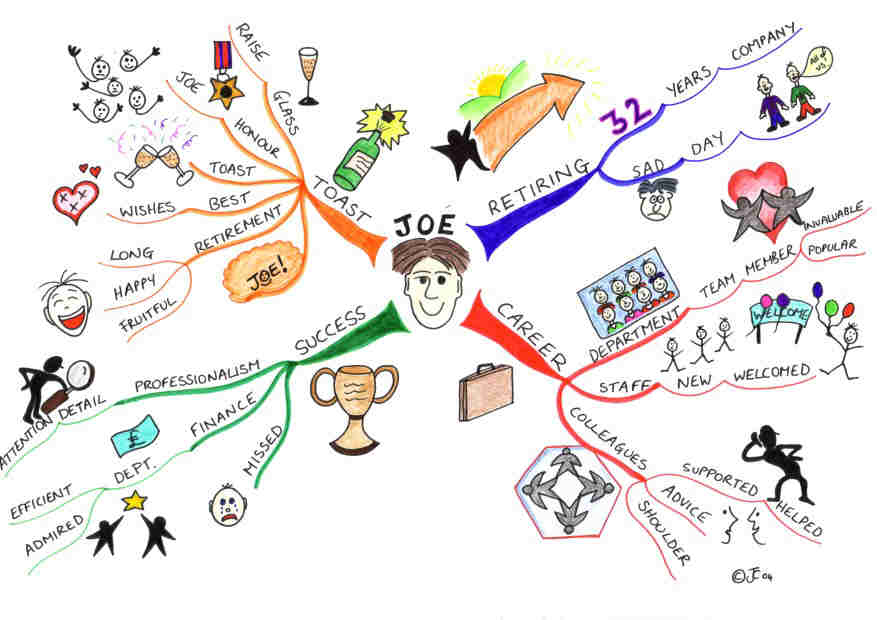
Memoir Writing and Brainstorming have a lot in common. When we Brainstorm, we try to delve into our own heads and create a visual representation of what is going on in our own thought process. When we write memoirs, we try to delve into our own heads and create a written explaination of something important to us.
Both work hand in hand in developing good writers...
Examples of Mind Mapping:
Time
Joe
global warming
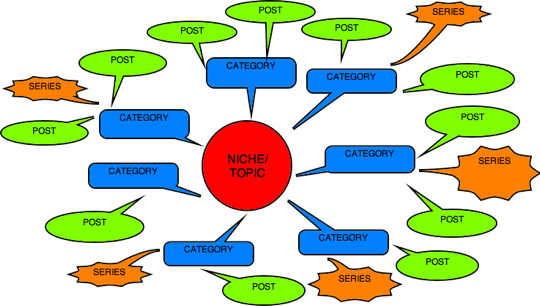
Generic Mind Map
Examples of Audio Memoirs:
Dael Orlandosmith's "When You Talk About Music"
Colin Quinn's "Toast"
Dan Savage's Man of Perpetual Sorrow
This American Life's "Tales from the Net"
HOMEWORK
READ: Chapter 2 “Invention”—Play close attention to the checklist on Page 21.
Chapter 7 “Description”
WRITE: Freewrite on the topic you want to write about in the comments section on the blog. Give me at least 2 paragraphs.
BRING TO CLASS: Pictures, artifacts, technologies, or other items that are important to the story you want to tell. Be prepared to do a “show and tell”
Bring your Mind Map
Click Here to Read More..
Both work hand in hand in developing good writers...
Examples of Mind Mapping:
Time
Joe
global warming
Generic Mind Map
Examples of Audio Memoirs:
Dael Orlandosmith's "When You Talk About Music"
Colin Quinn's "Toast"
Dan Savage's Man of Perpetual Sorrow
This American Life's "Tales from the Net"
HOMEWORK
READ: Chapter 2 “Invention”—Play close attention to the checklist on Page 21.
Chapter 7 “Description”
WRITE: Freewrite on the topic you want to write about in the comments section on the blog. Give me at least 2 paragraphs.
BRING TO CLASS: Pictures, artifacts, technologies, or other items that are important to the story you want to tell. Be prepared to do a “show and tell”
Bring your Mind Map
Click Here to Read More..
Sunday, January 11, 2009
Welcome to ENC 1101 (Syllabus Below)
Thank you for signing up for this class. We will use this blog for current updates, out of class writings, and various projects. Please make sure you come to visit this page as much as possible throughout the semester...
In addition, I know that English I (because it’s required) is a course that some students are taking to “test the waters” of the higher educational environment to decide if college is “for them.” Others may be returning to school after years in the work force, and because they may have chosen a specific career goal, English I is the first step to that end. And finally, some students who are undecided on their career choice but want a college degree on their resumes are taking English I because it’s required and useful preparation for doing well in higher-level courses that require writing. Whichever of these three categories comes closest to your situation, I say to you that English I offers hands-on experience in reading and writing that will be extremely useful to your future.
While this will be a very interactive course (using lecture, group discussion, and individualized instruction), this will also be a very time-consuming course. I will expect your full attention during class (please no cell phones, texting, or useless websurfing) and I expect you to devote at least two hours out of class for every hour in class.
ASSIGNMENT FOR NEXT CLASS:
1. Purchase your books
2. Sign up for a Google Account and post underneath with a little bit about yourself and a link to your blog.
3. Read Chapter 1 in Patterns of College Writing
4. Download, read, and sign the syllabus.
Click Here to Read More..
In addition, I know that English I (because it’s required) is a course that some students are taking to “test the waters” of the higher educational environment to decide if college is “for them.” Others may be returning to school after years in the work force, and because they may have chosen a specific career goal, English I is the first step to that end. And finally, some students who are undecided on their career choice but want a college degree on their resumes are taking English I because it’s required and useful preparation for doing well in higher-level courses that require writing. Whichever of these three categories comes closest to your situation, I say to you that English I offers hands-on experience in reading and writing that will be extremely useful to your future.
While this will be a very interactive course (using lecture, group discussion, and individualized instruction), this will also be a very time-consuming course. I will expect your full attention during class (please no cell phones, texting, or useless websurfing) and I expect you to devote at least two hours out of class for every hour in class.
ASSIGNMENT FOR NEXT CLASS:
1. Purchase your books
2. Sign up for a Google Account and post underneath with a little bit about yourself and a link to your blog.
3. Read Chapter 1 in Patterns of College Writing
4. Download, read, and sign the syllabus.
Click Here to Read More..
Subscribe to:
Posts (Atom)

 Posts
Posts